

Handmade body butter that doesn't feel greasy? Not a myth, it can be done. Here are 5 ways to make your DIY body butter feel lightweight and non-greasy on the skin.
What is body butter?
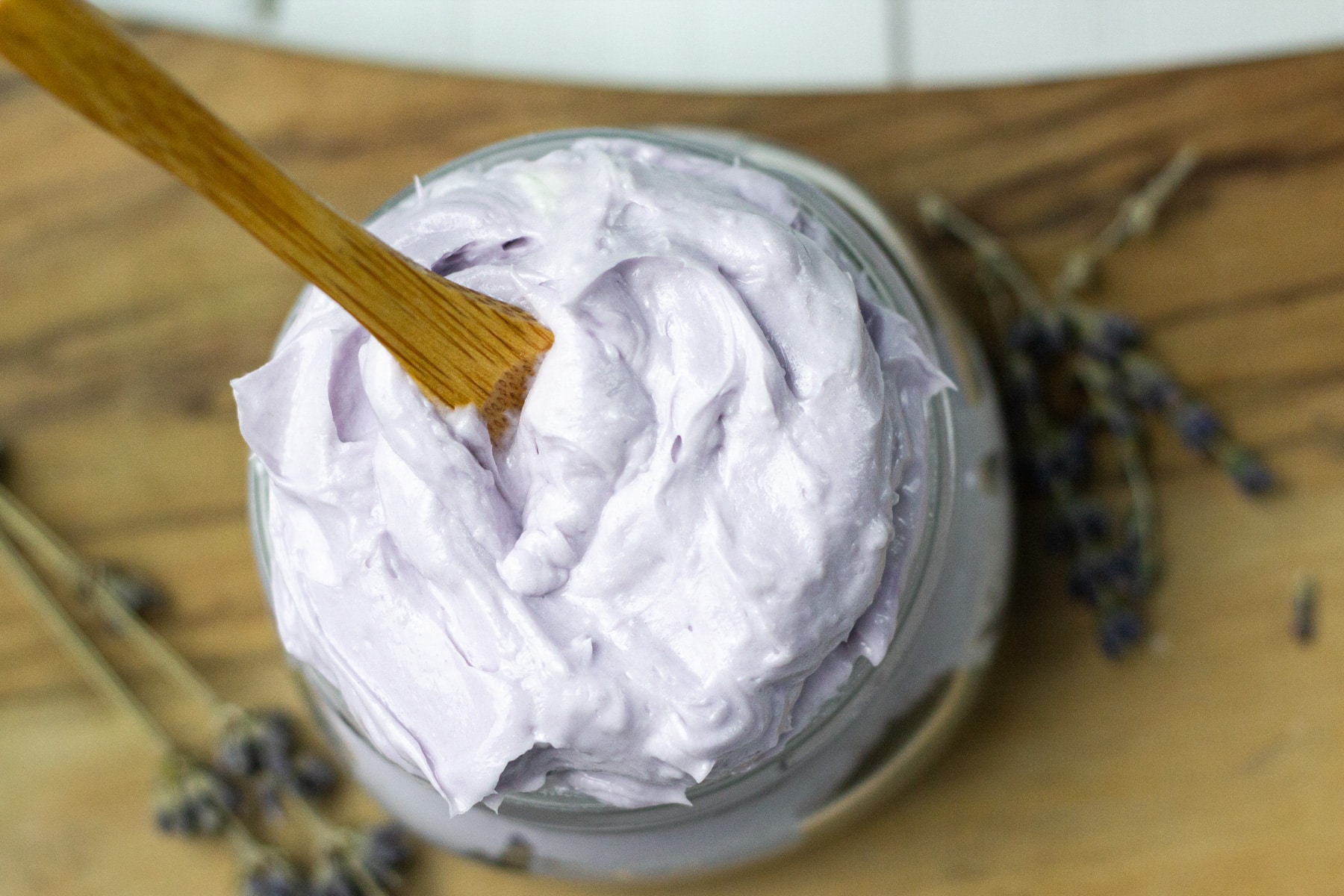
Body butter can be anything from a very heavy 100% shea butter product to a more lightweight body cream. There's no clear definition.
The most common homemade body butter is a rich body cream that's 100% oil-based. It's made of natural butters (like shea, mango or cocoa butter) and varying amounts of liquid oil to help make it soft and lightweight. A lot of times, body butters are whipped to make them spreadable and airy.
What's the difference to a lotion? It's mainly the water content. Lotions can contain up to 70% of water, while most body butters don't contain any water. They're essentially made of 100% fats and oils. Unless they have been emulsified, but more on that later.
Recommended reading: Body butter vs lotion vs body oil
Why does my body butter feel too oily?
When trying homemade body butter for the first time, you might be surprised at how heavy the texture feels. Especially, if you're used to store-bought body butters that also contain water and other ingredients to speed up absorption.
When we talk about a greasy feel, we usually mean that the product stays on top of the skin and absorbs slowly. If you want your body butter to have a dry finish without feeling tacky or slippery. Here's what you can do:
1. Choose the right ingredients
Keep in mind that not all butters and oils are created equal. Meaning that the ingredients you choose for your body butter greatly affect the end result. If you want to create a body butter that absorbs fast, you need to pick a butter that has a speedy absorption rate.
While it's best to experience the absorption rate and skin feel of each ingredient for oneself, since a greasy feel is somewhat subjective, it's not always possible. That's why I've compiled absorption rates and skin feels of some common butters/oils/fats into this handy dandy chart:
| Ingredient | Absorption Rate | Skin Feel |
|---|---|---|
| shea butter | very slow | greasy |
| mango butter | fast | dry |
| cocoa butter | fast | soft |
| kokum butter | fast | dry |
| murumuru butter | average | soft |
| grape seed oil | fast | dry |
| coconut oil | slow | slippery |
| rosehip seed oil | very fast | dry |
| camellia seed oil | fast | satin |
| olive oil | average - slow | slippery |
| sweet almond oil | average | soft |
| jojoba oil | average | satin |
| babassu oil | average | silky |
| avocado oil | slow | greasy |
| castor oil | very slow | sticky |
You can probably tell where I'm going with this: avoid slow-absorbing butters/oils, and you'll have a divine, non-greasy body butter.
Now, the most common body butter recipes out there call for shea butter combined with coconut oil, olive oil, and the like. Well, you've just combined the heaviest ingredients possible, and your end product will be just that - heavy.
But if you start looking at ingredients and examining their skin feel, you'll see that it can be very easy to create a less greasy product by choosing the right ingredients.
My absolute favorite is my mango body butter - 2 carefully chosen ingredients (mango butter and camellia seed oil) - and boom! You have yourself a fast-absorbing body butter with a satin smooth finish. Amazing!🤩

2. Add starch/clay
Probably the most popular "remedy" for greasy body butter is adding a starchy powder or clay to the formula.
Cornstarch, tapioca starch, arrowroot powder, and kaolin clay work quite well in making body butters feel less oily. They help absorb and bind some of the excess oils and create a somewhat dry finish on the skin.
How much cornstarch should you add to body butter?
Start with 1 teaspoon per 150g of oils/butters. If that's not enough, you can slightly increase the amount. If you add too much, it will start to create small clumps on the skin.
3. Whip it up!
I like making whipped body butter, and I know many of you do too! There's just something so luxurious about this fluffy cloud of goodness. Aside from that, it also helps make body butter feel a bit more lightweight.
Through the whipping process, air is incorporated into the mixture, which makes it softer and more spreadable. Where there are tiny air bubbles, there can't be any oil. You will also be able to cover a bigger area with less product, allowing you to apply a thinner layer on the skin.
4. Add Isopropyl Myristate
Isopropyl Myristate (IPM) is a lightweight ester or synthetic oil. It helps speed up absorption time or oil-based products.
You can add it to your body butter instead of a liquid oil. In my non-greasy shea body butter, I used it in combination with rosehip seed oil and really liked it.
Keep in mind, though, that IPM is not considered a "natural ingredient" and has a slight tendency to clog pores.
5. Turn it into an Emulsion
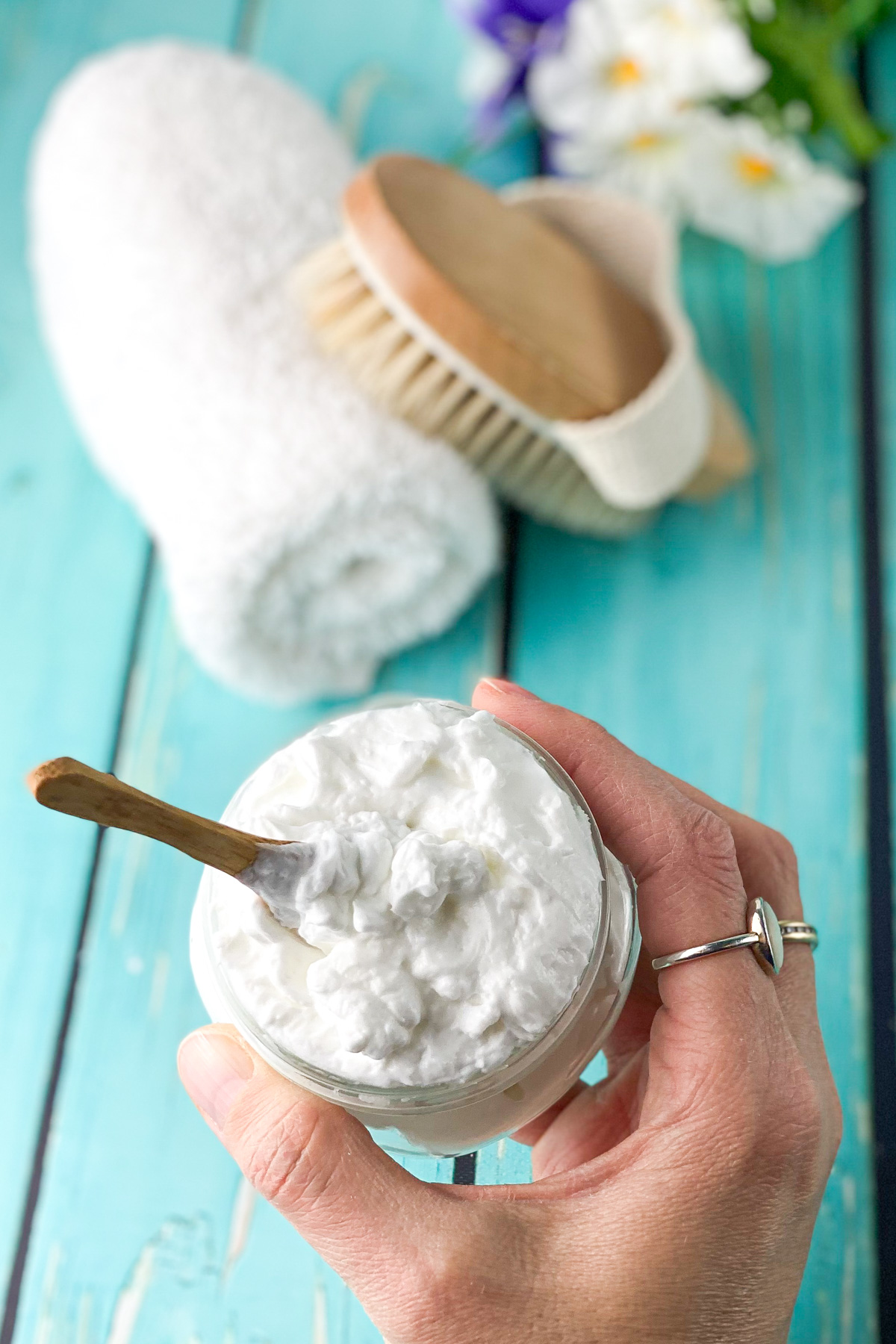
An emulsion is a blend of oil-based and water-based ingredients held together by an emulsifier. The presence of water gives the overall body butter a lightweight and creamy feel.
Over the years, emulsified body butters have become my favourite kind: they're really great at moisturizing and hydrating the skin, they absorb quickly and feel non-greasy, and they're temperature-stable, meaning they won't melt in hot weather. I'm a big fan, and you will be too, once you try them 😀!
Conclusion
There's a time and place for a thick, heavy feeling body butter. It can be very beneficial for healing and protecting very dry, rough skin.
But if you're looking to make your body butter feel less greasy, choosing the right lightweight butters and oils is probably the most straightforward way. Adding starch/clay and whipping it up are easy options, too.
You can use IPM instead of liquid oils and get great results.
However, if you're looking to make a lightweight body butter that can be used almost like a rich cream, emulsifying it will give you the best results. The formulation will have more ingredients and will need to add a preservative, but I think it's worth it.
What's your go-to remedy for greasy body butter? Let me know in the comments.
Until next time. Happy Tinkering!


Alice karanja says
Hello am a new beginner in the production thank you for the advice.
Kindly share how I can change already made body butter that is slippery on applying skin
Kind regards
Alice
Celine says
Hi Alice, you could try to melt your body butter again and add some cornstarch, arrowroot powder or cosmetic clay to it. 1 tsp per 100g.
Holly says
What if it's still oily after adding cornstarch?
Celine says
You can try to add a bit more, but adding cornstarch is more like a band-aid solution. I would try changing up the formula to include a fast absorbing butter and oil.
Mandy says
This is great information. I went and got myself addicted to body butter by purchasing a 2 oz jar of it on Amazon for $22. And then I fell in love. But I can't afford the price tag... 😬😬 Thank you so much for sharing your knowledge w inspired diy'rs.
Celine Logan says
Hi Mandy, I'm glad you found it helpful.