


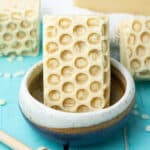
This beeswax and honey soap is made with moisturizing olive oil and shea butter. What's even better is that you get to use bubble wrap to achieve this fun design 🐝🍯!!! Beeswax produces a hard bar of soap, while honey boosts lather and adds a nice tan color. Both ingredients need some considerations to work with, which I'll explain in detail.
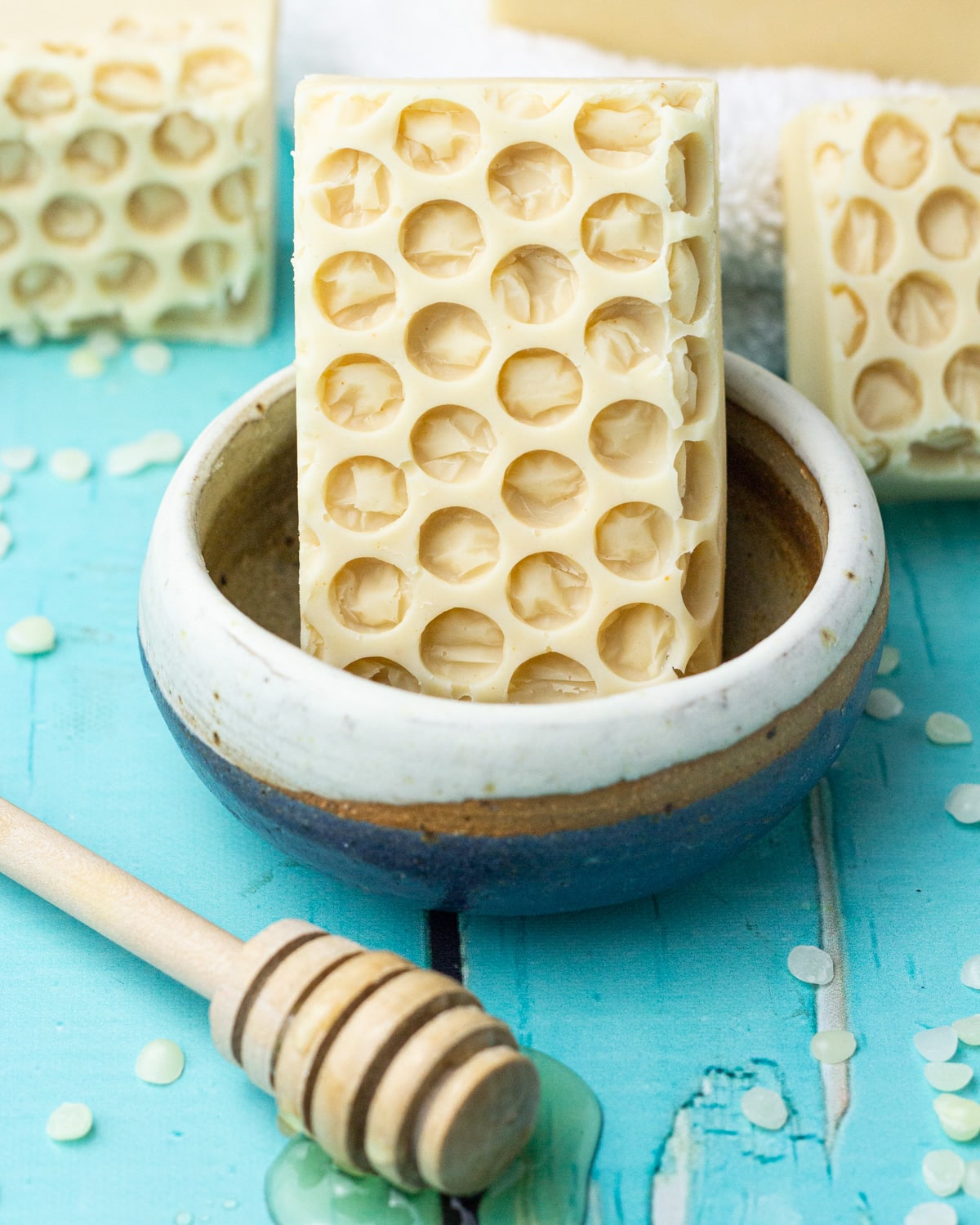
Aside from honey and beeswax being wonderful additions to soap, the main thing that got me hyped about this project was creating this fun honeycomb design with recycled bubble wrap. Whee! You don't even have to buy a special mold for this project, pretty neat, huh?
Turns out my bubble wrap was already a bit deflated by the time I got around to it. But if yours is nice and bouncy, your design will come out perfectly crisp.
Working with Beeswax in Soap
Beeswax is generally added to soap to make a bar harder and to reduce soda ash. Since it's a wax, however, not all of it will be transformed into soap in the end. Some of the wax will remain waxy (it's an "unsaponifiable") and decrease lather. That's why it's important to use no more than 1-2% of the oils in a recipe.
To keep beeswax liquid, you will have to work at higher temperatures (130℉) than you'd normally do. Higher temperatures and the fact that beeswax speeds up trace considerably, means that you have to be ready to pour your soap FAST.
Beeswax can also cause soap to crumble when cut, which is very frustrating. That's why we're going to be using a single cavity mold.
Working with Honey in Soap
Honey mainly consists of sugar, which, just like goat's milk, increases lather and bubbles in soap. That's good news when you're adding beeswax to your soap, which tends to reduce lather (Mother Nature has thought of everything 😊!).
It is also considered a humectant (something that can draw moisture to the skin), but since soap is a wash-off product, the benefit is likely minimal.
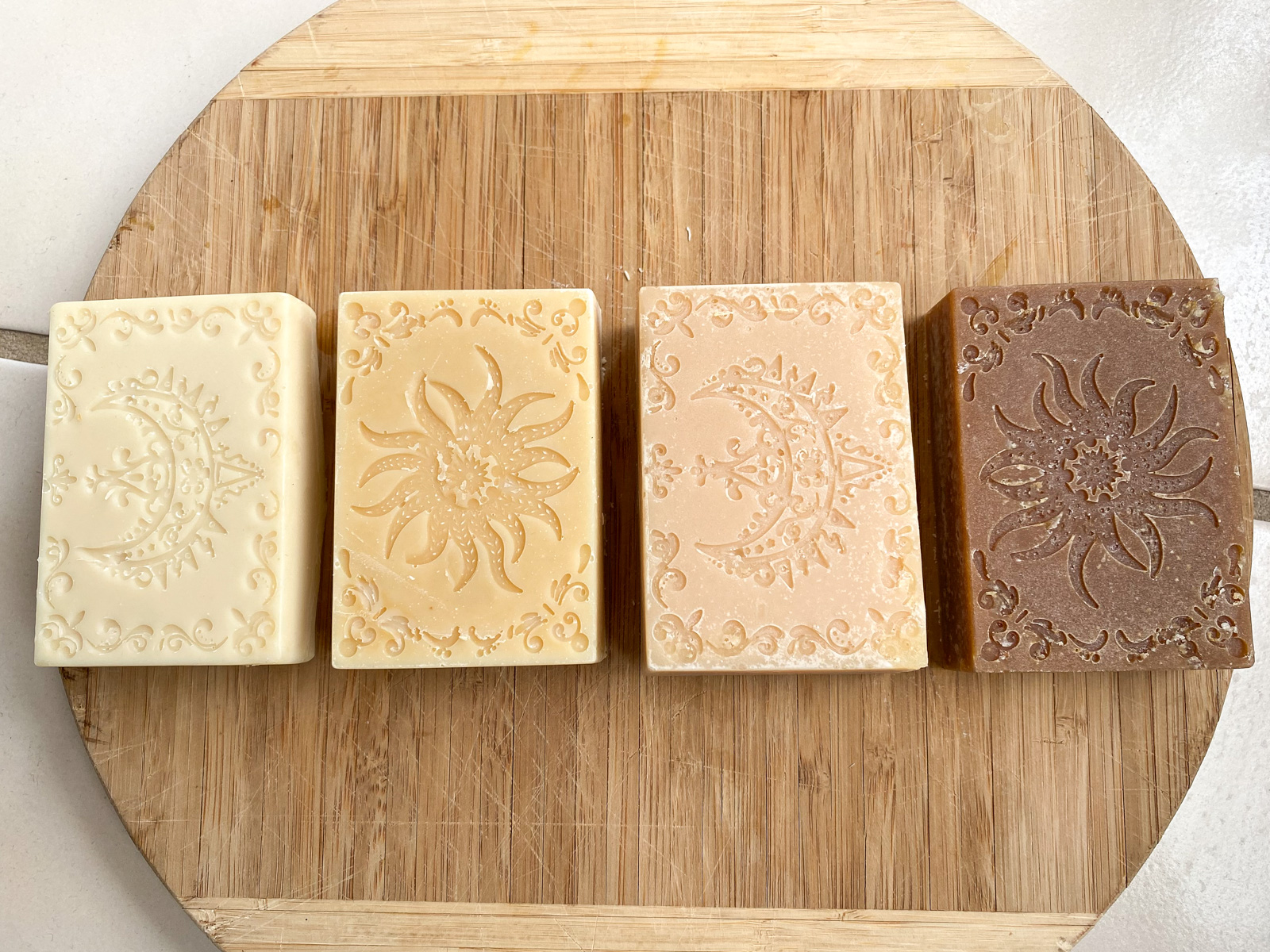
Honey can also color your soap, ranging from a dark brown to a warm pale yellow. This depends on when it is added in the soapmaking process, the soapmaking temperatures, and whether the soap gelled. The darker color occurs if the honey is scorched in hot temperatures.
Sometimes the scent of honey will come through in a soap initially, but I never found it long-lasting. If you desire a reliable honey scent, you'll have to add a fragrance oil. Look for one that won't discolor your soap.
Getting the Temperature Right
Beeswax has a high melting point of 145℉-150℉ (63℃ to 66℃). You don't want to heat it too high (above 185℉), or it will discolor, nor let it cool too much, or it will resolidify. So your sweet spot will be 130℉ for both lye solution and oils, which is where a digital infrared thermometer will come in handy.
Remember, the sugar in the honey can also play all sorts of tricks when added to soap, especially at these higher temperatures. It can cause the soap to heat up and crack or even "volcano". And, it can also color your soap a shade that you might not desire (see below).
The best way to keep all these issues under control, I found, is to work at just the right temperature (130℉), use a single cavity mold, and place the soap in the freezer right after pouring.
How to Make Beeswax and Honey Soap
Soapmaking is chemistry, and it requires the use of lye. Lye and fresh soap are caustic substances that need to be handled with care to avoid injury. Lye won't be present in the finished soap, but you'll need to follow safety precautions outlined below while you're working.
- Gear up for safety! Put on gloves and goggles, wear long sleeves and make sure you're in a well-ventilated area. Don't soap around pets or children!
- Into a small plastic cup, measure lye
- Into a medium-sized container, measure water
- Create a lye-water solution by adding lye to water and stirring until fully dissolved. Don't inhale fumes coming off the lye solution! Set aside to cool.
- Prepare the soap mold by cutting bubble wrap into 3 x 2 ¼ inch pieces, and place on the bottom of the mold

- Place the mold on a cutting board for easy handling later
- Melt coconut oil, shea butter, and beeswax over medium heat in a water bath or on short bursts in the microwave; make sure beeswax is fully melted
- Add olive and castor oil
- Using a thermometer, make sure that both the lye solution and oils are at 130℉ (you might have to reheat one or the other or wait a while longer).
- Add fragrance oil and honey to warm oils

- Slowly and carefully pour the lye solution into the oils
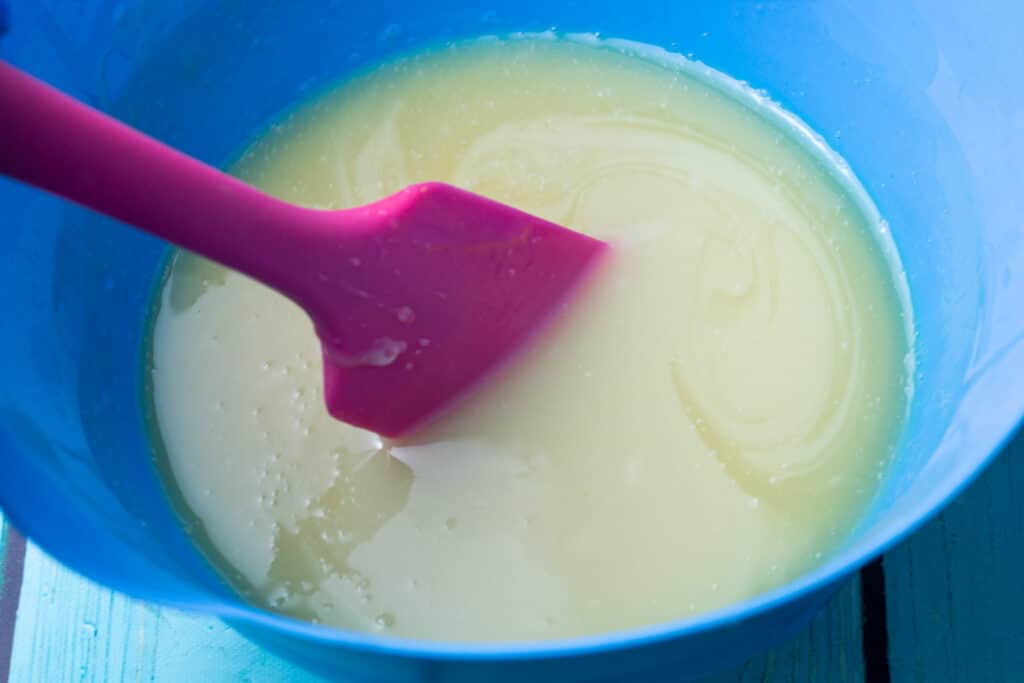
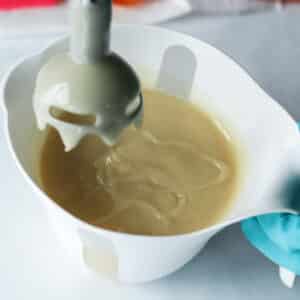
- Stick blend briefly until soap batter is at light trace (light pudding consistency)
- Continue stirring using a spatula until medium trace

- Pour the soap mixture into the soap mold and tap down to release any air bubbles

- Place soaps in the freezer for 3-4 hours
- Unmold bars of soap after 48 hours by pulling on the sides first. Gently peel off the bubble wrap


- Let the soap cure for 4-6 weeks
- Store in an empty shoebox away from heat and humidity for up to 12 months
While other waxes can technically be used in soap, they behave differently from beeswax. Candelilla and carnauba have even higher melting points and are harder, which means they're more likely to cause crumbling when cutting. If you want to make a harder bar of soap without using beeswax, check out this long-lasting soap recipe.
Fresh beeswax and honey soap may have a very light, sweet scent immediately after making, but this typically fades within 1-2 weeks of curing. The natural scent isn't strong enough to last long-term in a finished bar, so adding a honey fragrance oil is recommended if you want that aroma to remain throughout the life of the soap.
You can use a loaf mold, but be prepared for potential crumbling when cutting due to the beeswax content. To minimize this, wait until the soap is only 12-18 hours old before cutting (rather than the typical 24-48 hours), when it's still slightly pliable. Use a sharp knife or wire cutter and work slowly with even pressure.
This is likely soda ash, which is a harmless cosmetic issue caused by the soap's surface reacting with carbon dioxide in the air. Beeswax soap is actually less prone to soda ash than regular soap, but it can still occur. To prevent it, spray the surface with 99% isopropyl alcohol immediately after pouring, or steam the finished bars lightly to remove any ash that forms.
Beeswax and Honey Soap Recipe
Homemade honey & beeswax soap recipe with nourishing olive oil and shea butter. Technical details: superfat: 5%, lye concentration: 35%
Ingredients
- 2.7 oz distilled water 76 g
- 1.4 oz Sodium Hydroxide (lye) 41 g
- 3.2 oz coconut oil 89 g (30%)
- 3.9 oz olive oil 110 g (37%)
- 2.6 oz shea butter 74 g (25%)
- 0.2 oz beeswax pellets white or yellow beeswax, 6 g (2%)
- 0.6 oz castor oil 18 g (6%)
- 0.4 oz honeycomb fragrance oil from brambleberry: 11 g
- 1 teaspoon honey fully liquid, if crystalized heat up in microwave or water bath and let cool
Instructions
-
Gear up for safety! Put on gloves and goggles, wear long sleeves and make sure you're in a well-ventilated area
-
Into small plastic cup measure lye
-
Into medium sized container measure water
-
Create lye water solution by adding lye to water and stir until fully dissolved. Don't inhale fumes coming off the lye solution! Set aside to cool.
-
Prepare soap mold by cutting bubble wrap into 3 x 2 ¼ inch pieces, place on bottom of mold
-
Place mold on cutting board for easy handling later
-
Melt coconut oil, shea butter and beeswax over medium heat in a water bath or on short bursts in the microwave, make sure beeswax is fully melted
-
Add olive and castor oil
-
Ensure temperature of lye solution and oils is at around 130 degrees F
-
Add fragrance oil and honey to melted oils
-
Slowly and carefully pour lye solution into the oils
-
Stick blend briefly until soap batter is at very light trace (light pudding consistency)
-
Continue stirring using spatula until medium trace
-
Pour soap mixture into soap mold and tap down to release any air bubbles
-
Place soaps in freezer for 3-4 hours
-
Unmold bars of soap after 48 hours by pulling on sides first. Gently peel off bubble wrap
-
Let soap cure for 4-6 weeks
-
Store in empty shoebox away from heat and humidity up to 12 months


Micaelynn Gonzalez says
Hi! For step 7, do you melt the coconut oil, she butter, and beeswax all in one bath? Or separately? I’m looking forward to trying this recipe (:
Thank you!
Celine says
yes all in one. Hope that helps. Happy Soaping!
Allison says
Hello,
I am curious, could I skip the honey in this recipe? How will this affect the bar?
Celine says
Hi Allison, absolutely leave the honey out, it'll be fine. bests, Celine
Gina says
The use of the bubble wrap is so clever! Thanks for the suggestion and recipe.
Celine Logan says
Thanks Gina, I'm glad you enjoy it 🙂
Julie says
I really like this recipe, and it’s the first one I ever made. We used home-raised honey and beeswax to make special gifts for family at Christmas. I didn’t have a rectangle soap mold, but I used the bumble bee soap mold from Hobby Lobby and it filled it perfectly. I also used vanilla essential oil in place of the honeycomb fragrance.
Celine Logan says
Hi Julie, I'm so glad you like the recipe and thank you for commenting! Let me know if you have any questions. Happy Soaping 🙂